
Today we worshipped at the Pond- a reminder that God exists in nature and in community as well as when we gather more formally at 520 E. Seminary St., Greencastle, IN. We followed worship with a pitch-in and fellowship time. Today was a time of joy and celebration as well as welcoming of students new to us and those returning. The following is a brief reflection:
What makes you come alive? What gives you joy? Recently in a meeting with other clergy we were going around the room giving an update of things that other people needed to know. I was struck by the energy and passion evident in the words of one presenter about a new program that was beginning shortly. It was clear the subject was really important to her. It came through in her words and her actions. And because her joy was evident to us, we also caught some of it and our day was better for that experience.
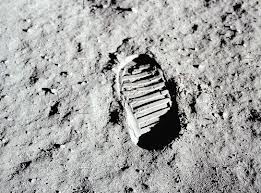
We mourn today the death of Neil Armstrong. He said: “that was one small step for a man and one giant leap for mankind,” when he first stepped onto the surface of the moon. The one whose fellow astronaut, Buzz Aldrin, celebrated the joy of the moment by taking communion. A moment in history that remains in the minds of many of us who heard those first words that July night in 1969. Joy. Mystery. New life.
In the Gospel of John, Jesus tells those with him that He is the one who can make us come alive and give us joy. But that runs counter to our tendency to think that we are in control of our life. We tend to think that, by our own efforts, we have all that we need in order to accomplish whatever task is before us. The realization – that without a relationship with God, through Christ – we are not fully alive may be what caused some of those present to call Jesus’ teaching “hard” and to ask “who can accept it” (John 6:60). It may also be that when you know someone in one role, it can be hard to see them in another. The disciples that Jesus was addressing had almost certainly been with Jesus when the 5,000 were fed, when healings were performed and perhaps even when he walked on water. So they probably were willing to accept Jesus as a miracle worker, as a holy man (lower case “h”).
Indeed, Jesus asks those who say his teaching is too hard: what would it take for you to believe? If you saw me ascend into heaven, would that be enough? If not, then what? Whatever signs Jesus could give it was unlikely it would be enough. Faith based solely on signs rather than understanding, and a willingness to risk, is unlikely to survive the testing that faces all of us in this life. Robert Kysar says that “faith is to be open to God’s revelation in history, even though the experience is ambiguous.”[1] Those who turned away were not willing to see Jesus as God’s revelation. They wanted an experience that was unabashedly unambiguous.
Jesus tells those gathered that He himself is the one by and through whom these disciples can know God. To know Jesus – fully and truly – is to know God. These disciples had seen wonderful and marvelous things, yes. But they also knew Jesus was human as they were human in terms of needing sleep and food. They just couldn’t shift their understanding of Jesus and so they rejected both him and his teachings as too hard. When we don’t like or understand something, we often seek out others who will agree with us as confirmation that our opinion or our response is “right.” That’s what the disciples were doing when they said Jesus’ teachings were too hard and they went away. They weren’t willing to risk changing their preconceptions about God or to understand Jesus as one sent from God in a new way.
And so Jesus turns to those who are left and asks them the question: “Do you also wish to go away?” (6:67). Jesus will not compel us to stay. If we stay, it must be our free choice. Our choice does not have to be made in an instant, thank goodness. Indeed, Peter himself says “we have come to believe” (6:69). This suggests a journey. Questions, answers, reflection, decision. According to Kysar, “faith is a continuous process of reassessment and growth.”[2] Peter, through his reassessment of his experiences as a disciple of Jesus has come to believe that Jesus is the one who offers the way to eternal life. Jesus is the one who offers the most authentic relationship with God. Peter and the others who remain are willing to risk what those who turned away are not. The Twelve are willing to revisit their preconceptions about who is in charge. About what is really needed if we are to be fully alive and full of joy. They are willing to accept the experience even if there is ambiguity. They want to be in relationship with Jesus even though they don’t fully understand.
Jesus tells us that we must eat his flesh and drink his blood if we are to abide in Him and He in us. These statements, taken literally, were and are abhorrent to many. As Episcopalians, we do say that Jesus is “really present” in Communion in ways we do not understand. It is a mystery and people may understand this mystery in different ways. When we eat something, we take it into us. Whatever we eat is changed, and we are changed, by the act of eating. We have a relationship with what we have eaten in ways that we do not have with food we do not eat. We need food to stay alive. Indeed, what food we eat can help us be healthy – or can cause us to be sick. Jesus is the food that gives us life. Life with Jesus is a healthy life.
Jesus reminded those who were present that the manna sent to the Israelites while they were in exile in the desert was food for the day. Indeed, if someone gathered more than was needed for that day, the manna was inedible the next day. The manna was available to anyone who could pick it up. But Jesus is the food that lasts forever. There is no getting too much of Jesus. Jesus is, indeed, the bread of life. Forever after we are changed because He abides in us and we in him. Come, eat and be transformed. Your relationship with Jesus is the source of true life and true joy even when your experience includes ambiguity and questions. Jesus does not turn us away if we ask questions. Jesus waits, patiently, for us to come to believe.
Neil Armstrong and Buzz Aldrin were only two in a long line of men and women who pursued the mystery of space. Who trusted in their God, as they understood their God, to take them safely from and back to earth. They risked much. They gained much that we benefit from 43 years later. Communion on the face of the moon is something that you and I are not likely to experience ourselves- but we can appreciate how much faith and trust Buzz Aldrin, Neil Armstrong and others had that at that moment of first touching the face of another planet, the response was to respond to God’s love by taking communion. Joy. Celebration. Mystery. New life.
Buzz Aldrin and Neil Armstrong answered the question in the same way that Peter did: No, Lord, we will stay. Where else would we go? You are the bread of life. Thanks be to God!
[1] Robert Kysar. John, The Maverick Gospel (Louisville:Westminster John Knox Press, 2007), 102.
[2]Id.
Share